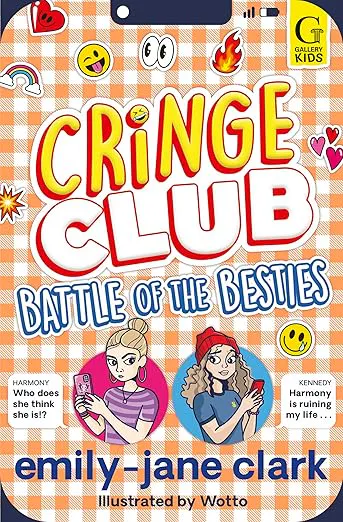
Cringe Club
By Emily-Jane Clark
New school, new phone, new friends—but why is Hell High becoming surprisingly brilliant?
Pageticker community rating
Average score: 4.6
From 20 readers
What do our readers think of Cringe Club? (Generated from the text of reviews of the book)
Children find the book very funny and enjoy its unusual chat-style layout, doodles and quick messages. They also like its positive message about friendship, fitting in and being yourself.
What does the Pageticker team say about Cringe Club?
Cringe Club is a creative take on starting a new school, told entirely through messages, emojis, doodles and the occasional spectacularly awkward mishap. Emily-Jane Clark balances humour with a warm understanding of friendship, family change and the pressure to fit in, making this a particularly good choice for readers who enjoy Lottie Brooks, Dork Diaries or Diary of a Wimpy Kid.
Genres
What is Cringe Club about?
Kennedy King has been forced to move to London and start at Hellington High School, which she dubs 'Hell High'. The only upside? Her mother finally lets her have her own phone, allowing her to stay connected with her best friends through their group chat, 'Cringe Club'. This hilarious story, told entirely through their messages, explores themes of fitting in, making friends, and embracing one's unique quirks.
Discussion ideas around Cringe Club
A fresh start: How does moving to London change Kennedy’s life, and what might help someone feel more at home in a new school?
What does ‘cringe’ mean?: Why do Kennedy and her friends call themselves the Cringe Club, and how does the story suggest that embarrassing moments can sometimes bring people closer?
Friendship across distance: How do Kennedy, Liv and Devon stay connected when they are no longer at the same school, and what makes their friendship work?
Being yourself: Which characters try to change themselves to fit in, and what do they learn about being liked for who they really are?
Messages and misunderstandings: What can be difficult about sharing feelings through messages instead of speaking face to face, and how might a misunderstanding be cleared up?
Pages
352 pages
Reading age
Junior (8-13)
This edition
2025
First published
2025
Celebrate every book your child reads
Keep track of the books they've read on Pageticker and watch their reading journey grow.
Ready to get started?
Join thousands of readers discovering their next favourite book
You might also like




Other books by Emily-Jane Clark