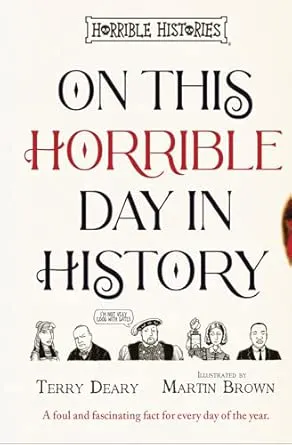
Horrible Histories: Woeful Second World War
By Terry Deary
Discover wartime Britain’s strangest secrets, from shocking meals to an unexpected gas-mask trick.
Pageticker community rating
Average score: 4.21
From 14 readers
What do our readers think of Horrible Histories: Woeful Second World War? (Generated from the text of reviews of the book)
Children enjoy the funny facts, silly details and surprising stories, and many find the book an exciting way to learn about the Second World War. Some children find the darker and scarier parts too much, especially if they are younger or sensitive.
What does the Pageticker team say about Horrible Histories: Woeful Second World War?
Terry Deary brings his trademark mix of gruesome facts, cheeky jokes and lively illustrations to one of the original Horrible Histories titles. It makes a complicated and frightening subject approachable, covering everything from Dad’s Army to wartime food and battlefield blunders without turning history into a dry list of dates. The humour sometimes sits close to upsetting material, so be warned!
Genres
What is Horrible Histories: Woeful Second World War about?
Discover the dreadful details of the Second World War, from the truth about Dad's Army to the perils of wearing white knickers. Learn about the blitzed Brits' unusual meals and how to make a rude noise with a gas mask. History has never been so horrible!
About the author
Terry Deary is a British author best known for writing the funny and fascinating Horrible Histories books. He loves making history exciting by sharing weird and wonderful facts about the past. Terry’s clever stories and jokes help children learn and laugh at the same time, making reading about history lots of fun!
Discussion ideas around Horrible Histories: Woeful Second World War
History with a laugh: Why do you think Terry Deary uses jokes and disgusting details when writing about the Second World War, and how do these choices affect the way the facts stay in your mind?
Coping in wartime: What do the unusual meals, gas masks and other everyday details suggest about how people tried to cope during the war?
Bravery and foolishness: Which examples in the book show people being brave, and which show that bravery without good planning can become dangerous?
Different experiences: How might the war feel different to a soldier, a child, a family at home or someone living in a country under attack?
Jokes about serious events: Are there subjects that should not be made funny, or can humour sometimes help people understand frightening events?
Pages
139 pages
Reading age
Junior (8-13)
This edition
2007
First published
1999
Celebrate every book your child reads
Keep track of the books they've read on Pageticker and watch their reading journey grow.

Ready to get started?
Join thousands of readers discovering their next favourite book
You might also like








Other books by Terry Deary